
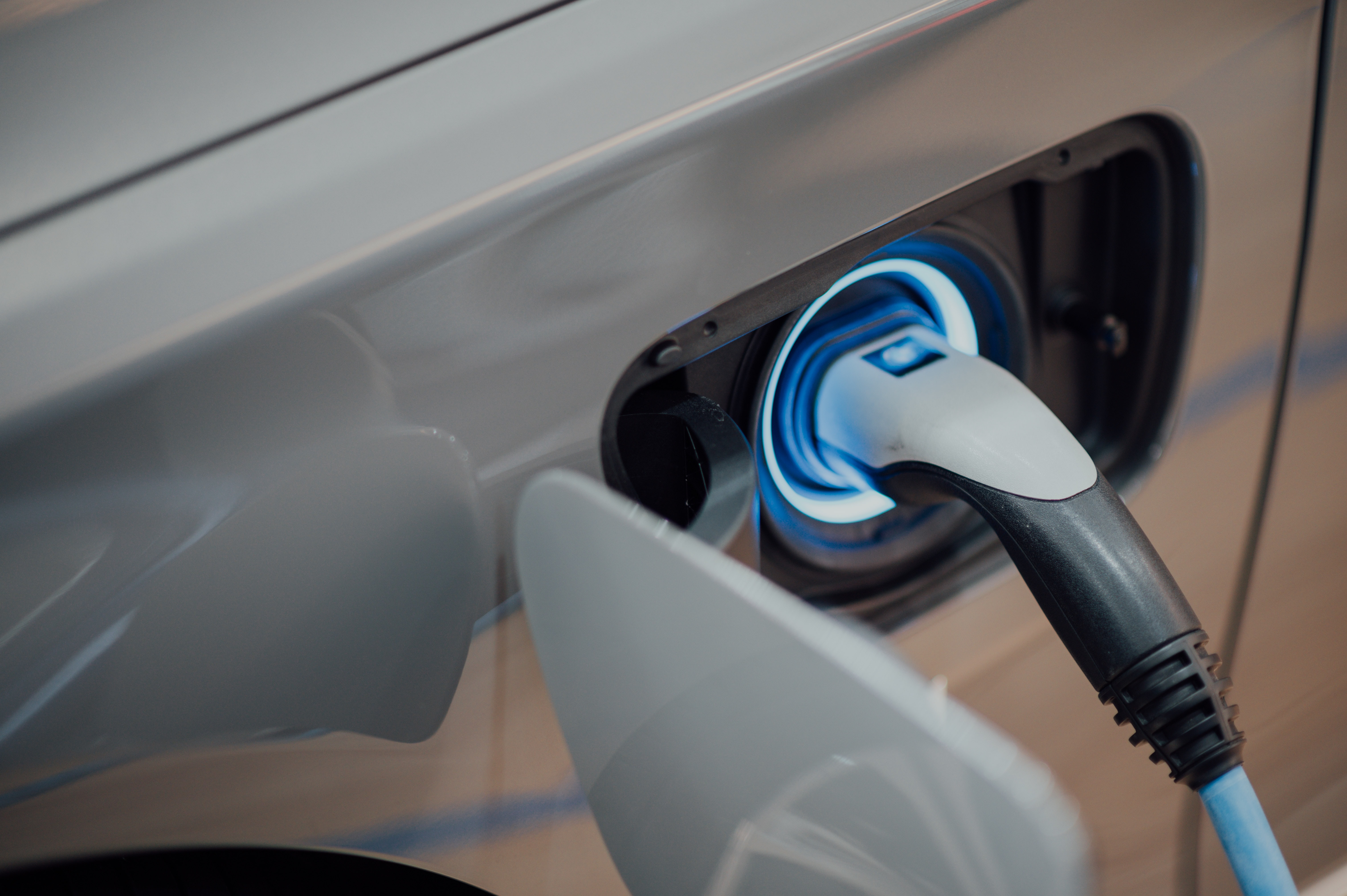
If you wonder how a electric car level 2 charger works and what exactly does it do, well this blog is for you. The answer has to do with how an electric vehicle recharges its battery. Are you surprised to find out the station is not actually a “charger”? The industry name for the station is EVSE, which is short for Electric Vehicle Supply Equipment. What the station does is control the access point to from the electric vehicle to the power grid. Let’s go more in depth on how you will charge your vehicle at home or at the office, where the majority of your charging will occur. On a quick side note, we believe in accommodating EV drivers that don’t live a single-family home by installing level two chargers in the right places.
We now know Level 2 chargers ae not chargers. They are actually quite simplistic. Let me explain. When we think of chargers, we think of “powering” or “reenergizing” while in fact, most chargers are only direct current power supplies. What they really do is contain electronic circuitry designed to turn alternate current (the current in our homes) into a defined and stable direct current voltage (what our batteries need). You are probably telling yourself, “Ahhh, now I get it, my Ev charger convers my alternate current to direct current”, the current my car’s battery needs. Not exactly! Let’s go deeper.
The charging is done by the car because the car understands how to treat its battery. When it comes to Level 1 and 2 charging stations, the cars take care of its charging but do another important job. One needs to recognize that electric vehicles come in all sizes, battery chemistries and battery voltages. As a result, it is not possible to put the EVSE outside or within the car. Where would you put it and it would not be functional for reasons we will visit later. All this to say it is the car itself holds the battery charger. Hence, the “charging station” has no voltage conversion circuity or responsibility relating to the electric vehicle expect for the circuitry it needs to operate its own electronics such as the display lights.
If the car itself holds the battery and converts the current from alternate to direct current, you are probably asking yourself why do I need to buy a “charger” or better identified as electrical vehicle supply equipment. The device on the wall or pedestal has one job and one job only, which is to safely deliver alternate power to a car, nothing more. Remember the word safely which we will look into why soon.
In the car, you will find a module that is actually the charger. It takes alternate current coming from the EVSE to rectify it to direct current, to then boost it up to the battery packs required charge voltage and send it back into the battery pack. Inside the battery packs, modules which monitor to balance out each cell.
It is not time to understand how the EVSE safely delivers alternate power to the car and the importance of properly functioning station. The electric vehicle’s charger may be capable of pulling more power from the grid than an electric circuit was set up for. It is the EVSE job to monitor how much current the car can pull (example 30 Amps) and then to supply it when requested.
The control device (a contactor with electromagnetic switch) inside the EVSE is what prevents the car from overloading an electric circuit. When energized, the EVSE is a gateway (a right of passage) between the car and the grid. The EVSE regulates and allows the electric vehicle how much power it can safely pull from the grid measured in Amperage. If the EVSE can only supply 30 amps based on the circuit its set up on, the EVSE makes the car aware of this by not letting the electric vehicle pull more than 30 amps. If you do pull more than 30 amps, it is a fire hazard.